China Best Orthopedic Implants and Instruments Supplier
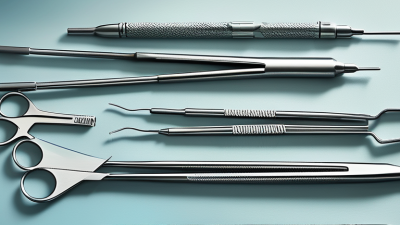
Choosing the China Best Orthopedic Implants and Instruments Supplier requires more than comparing catalog prices. It demands evidence, clinical understanding, and disciplined quality control. A reliable supplier should offer orthopedic implants and instruments with documented materials, precise machining, validated sterilization, and traceable production records. Titanium plates should show clean edges and consistent screw holes. Instruments should open smoothly, lock securely, and withstand repeated processing.
Sir John Charnley, a pioneer of modern joint replacement, emphasized a practical principle: “The surgeon is not an operator, but a craftsman.” His words remain relevant. Even an advanced implant can fail when design, surgical technique, or patient selection is misunderstood. Experienced manufacturers therefore work with surgeons, engineers, and quality teams before releasing a product. They study fit, fatigue resistance, anatomical variation, and operating-room handling. These details often decide whether a device performs comfortably under pressure.
Still, no supplier is perfect. Claims require verification. Product brochures cannot replace audit reports, technical files, complaint records, or clinical feedback. Buyers should examine ISO 13485 certification, risk-management procedures, inspection data, and after-sales responsiveness. Regulatory expectations also differ between markets, so documentation must match the destination country. A thoughtful supplier explains limitations instead of promising universal success.
This guide introduces key evaluation points for Chinese manufacturers. It considers product range, customization, quality systems, delivery reliability, and professional support. The goal is not to praise one factory blindly. It is to help hospitals, distributors, and surgical teams ask sharper questions before choosing a long-term partner. Small details matter. Safety comes first.
Company Profile and Role in the Orthopedic Implant Industry
China Best Orthopedic Implants and Instruments Supplier
Company Profile and Role in the Orthopedic Implant Industry
China’s orthopedic implant industry is becoming more technically mature and globally connected. The World Health Organization reports that musculoskeletal conditions affect about 1.71 billion people worldwide. This demand requires more than low-cost production. It requires stable materials, accurate instruments, documented processes, and responsive technical support.
A reliable supplier should connect manufacturing experience with clinical understanding. Its company profile should show controlled machining, validated cleaning, dimensional inspection, and complete lot traceability. A practical production line may include titanium alloy components, sterile packaging checks, and instrument testing under repeated use. According to Grand View Research, the global orthopedic devices market was valued at approximately 47 billion US dollars in 2023. This growth increases pressure on suppliers to deliver consistent quality, not only attractive prices.
The supplier’s role also includes communication with hospitals, distributors, and orthopedic specialists. Product feedback can reveal problems that factory testing misses, such as difficult instrument handling or unclear implant markings. Technical files, material certificates, and inspection records support purchasing decisions and regulatory review. Still, no supplier is perfect. Production delays, training gaps, or incomplete feedback loops can occur. A responsible company should admit these weaknesses and correct them through audits, staff training, and measurable improvement plans. Experience matters most when it becomes repeatable evidence.
Material Standards, Design Features, and Manufacturing Processes
China Best Orthopedic Implants and Instruments Supplier
Material selection begins with clinical purpose, not appearance. Titanium alloys, cobalt-chromium alloys, PEEK, and UHMWPE each serve different mechanical needs. ASTM F136 titanium offers high strength, corrosion resistance, and biocompatibility for many implant applications. Surface roughness must also support controlled bone integration without trapping contaminants.
According to Grand View Research, the global orthopedic implants market exceeded USD 40 billion in 2023. Fortune Business Insights projects continued growth at roughly 5% annually through the next decade. This expansion increases pressure on suppliers to prove consistency, not merely production capacity. CNC machining, laser marking, additive manufacturing, and validated passivation can improve repeatability. Dimensional checks should follow approved drawings and applicable ISO requirements. Small defects matter.
Reliable manufacturing connects design controls with documented process evidence. ISO 13485-based quality systems support traceability from raw-material certificates to final inspection. Cleaning validation, sterilization compatibility, packaging integrity, and biological evaluation should be assessed before release. Instruments need balanced handles, precise cutting edges, and smooth transitions that reduce tissue irritation during use. Implants require controlled tolerances and verified fatigue performance.
A polished surface is not automatically a safe surface. That assumption deserves review. Some suppliers still focus heavily on visual inspection, while overlooking particle control or long-term wear testing. Experienced teams use risk analysis, lot sampling, and corrective-action records to challenge those gaps. The strongest supplier is not simply the fastest one; it is the one that can explain every material, measurement, and manufacturing decision.
Quality Control, Certifications, and Regulatory Compliance
China’s strongest orthopedic implant suppliers treat compliance as a daily production discipline, not a certificate on a wall. The 2023 ISO Survey recorded more than 38,000 ISO 13485 certificates worldwide, showing the broad adoption of medical-device quality systems. Yet certification alone proves little. A credible supplier links design controls, supplier audits, clean-room monitoring, and final inspection to one traceable record. Every lot should identify material heat, machining history, sterilization status, and release approval.
For titanium or cobalt-chromium components, incoming verification should include composition, dimensions, surface finish, and packaging integrity. Risk management should follow ISO 14971, while biological evaluation should align with ISO 10993 and the intended clinical use. Regulatory files need objective evidence. This includes validation protocols, calibrated instruments, nonconformance investigations, and corrective-action effectiveness checks. Export documentation must also match destination-market requirements, including labeling, technical files, and post-market responsibilities.
Independent testing matters. Professional orthopedic market reports continue to forecast steady procedure growth, increasing pressure on suppliers to scale without weakening controls. Growth is not proof of safety. During supplier assessments, I look for batch records, complaint trends, audit findings, and honest answers about rejected parts. One uncomfortable lesson remains: rushed inspections can miss small surface defects that later affect fixation. Quality systems must leave room for doubt, rechecking, and documented improvement.
How to Evaluate a Reliable China-Based Orthopedic Supplier
China Best Orthopedic Implants and Instruments Supplier
A reliable China-based orthopedic supplier needs more than competitive pricing. The World Health Organization reported that 1.71 billion people live with musculoskeletal conditions. This demand increases pressure on manufacturers to prove consistency, not just capacity. I examine the supplier’s ISO 13485 certificate, registration scope, production address, and recent audit records. The certificate should cover the exact implant or instrument category. A general certificate is not enough.
Material traceability matters at every stage. Request mill certificates, machining records, sterilization validation, and batch-level inspection reports. Check whether titanium, stainless steel, or cobalt-chrome materials match the approved specification. Fortune Business Insights estimated the global orthopedic devices market at USD 47.18 billion in 2023. Fast growth can attract inexperienced suppliers. That risk deserves attention. Ask for anonymized complaint data, corrective-action records, and product-change procedures. A supplier that cannot explain these records may not control its process.
Samples should be tested independently, especially for dimensions, surface finish, hardness, and packaging integrity. I would also review lead-time history rather than trusting a promised schedule. Production photographs help, but they do not replace an on-site or remote quality audit. I have learned that polished documents can hide weak follow-up. Supplier evaluation is never perfect. Still, written evidence, technical conversations, and repeat inspections create a more dependable decision.
How to Evaluate a Reliable China-Based Orthopedic Supplier
This practical evaluation model gives the greatest weight to quality systems and regulatory compliance because orthopedic implants and instruments require consistent manufacturing control, traceability, risk management, and market authorization. Technical capability, supply reliability, clinical documentation, and after-sales support should also be verified before qualification.