


How to Choose the Right Bone Plates for Global Sourcing?
Choosing the right bone plates for global sourcing requires more than comparing prices or catalog photographs. It demands clinical judgment, engineering evidence, and disciplined supplier verification. The plate must match the fracture pattern, anatomical site, fixation method, and expected load. A narrow clavicle plate cannot be judged like a thick distal femur plate. The difference is visible in contour, screw trajectory, edge finish, and fatigue performance.
The World Health Organization’s Global Patient Safety Report 2024 states that approximately one in ten patients experiences harm during healthcare, with more than half considered preventable. This finding makes implant traceability and quality control especially important. Buyers should review material certificates, batch records, sterilization validation, and complaint histories. ASTM F382 provides recognized testing methods for metallic bone plates, while ISO 10993 supports biological safety evaluation. ISO 13485 certification can also indicate a structured medical-device quality system, although certification alone proves little about daily manufacturing discipline.
Regulatory evidence must fit the destination market. The U.S. Food and Drug Administration’s 510(k) database can help verify comparable devices and cleared indications. European buyers should examine applicable MDR documentation, clinical evaluation, and post-market surveillance records. Supplier audits should include machining controls, passivation, packaging integrity, and dimensional inspection. Ask for real test reports, not polished brochures.
Price still attracts attention. That is understandable. Yet the cheapest plate may create hidden costs through revisions, delays, or inventory waste. A practical sourcing decision balances clinical suitability, mechanical evidence, regulatory readiness, and long-term supplier reliability. No checklist is perfect. Careful review remains essential.
Understanding Bone Plate Types and Their Clinical Applications
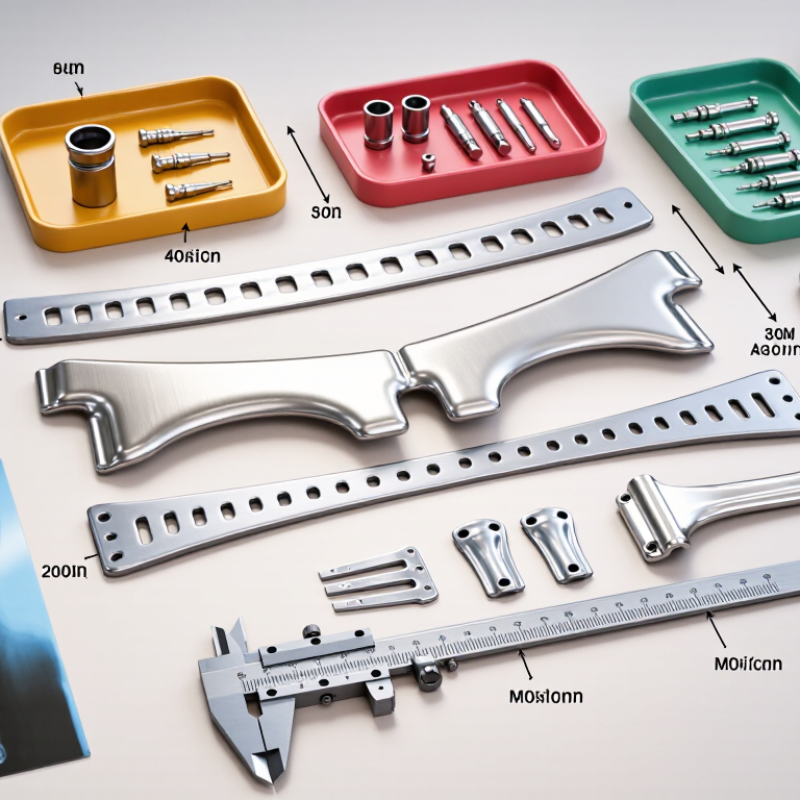
Choosing a bone plate starts with fracture geometry, not the catalog title. The plate must match the bone, load pattern, and surgical approach. Compression plates help approximate simple fracture lines under controlled loading. Locking plates use threaded interfaces and can support weaker bone. They are not automatically better. In practical specification reviews, plate stiffness often receives more attention than contour accuracy. That can be a mistake. A poorly fitting plate may irritate tissue or require excessive bending.
For metaphyseal and periarticular injuries, anatomically contoured plates can support fragments near a joint. Buttress plates resist shear when bone segments tend to slide. Reconstruction plates are useful when complex anatomy requires careful contouring. Small-fragment plates suit hand, foot, and selected facial procedures. Large-fragment systems address heavier loads in long bones. Pediatric applications need extra caution because growth areas change the risk profile. Clinical selection remains the surgeon’s responsibility, guided by imaging, bone quality, and fixation strategy.
Global sourcing adds another layer. Ask for material certificates, dimensional drawings, fatigue data, surface-finish details, and traceability records. Confirm compatibility among holes, screws, instruments, and sterilization packaging. A low unit price can hide inspection gaps or inconsistent tolerances. Request sample plates for contour and fit checks. This can reveal problems early. No document replaces clinical validation. Requirements also vary by market, so regulatory evidence and post-market processes should be reviewed before purchase.
| Bone Plate Type | Primary Mechanical Function | Typical Clinical Applications | Compatible Screw Strategy | Common Material Options | Key Design Features | Global Sourcing Checkpoints | Clinical Suitability |
|---|---|---|---|---|---|---|---|
| Compression Plate | Applies axial compression across a fracture when the plate is eccentrically loaded. | Simple transverse or short-oblique fractures of long bones where direct fracture compression is appropriate. | Standard cortical screws placed in compression holes; interfragmentary lag screws may be used when indicated. | Titanium alloy or stainless steel. | Dynamic compression holes, longitudinal plate holes, and a relatively rigid plate body. | Confirm hole geometry, screw compatibility, plate contouring limits, corrosion compatibility, and fatigue-performance documentation. | Established indication |
| Locking Compression Plate | Combines conventional compression with fixed-angle locking fixation. | Complex metaphyseal and diaphyseal fractures, osteoporotic bone, and situations requiring angular stability. | Accepts locking screws, conventional screws, or both, depending on the hole design. | Titanium alloy or stainless steel. | Combination holes with threaded locking sections and conventional compression sections. | Verify locking-thread accuracy, insertion torque requirements, driver interface, screw back-out resistance, and instrument compatibility. | Broad application |
| Reconstruction Plate | Provides fixation while allowing substantial contouring to match irregular bone anatomy. | Pelvic, acetabular, clavicular, mandibular, and other anatomically complex regions. | Usually used with standard cortical or cancellous screws; locking options may be available. | Titanium alloy or stainless steel. | Low-profile, malleable cross-section with notches or reduced bending resistance between holes. | Assess repeated-bending limits, contouring instructions, minimum bending radius, edge finishing, and risk of hole deformation. | Anatomy-dependent |
| Buttress Plate | Resists sliding and shear forces at a metaphyseal or articular fracture surface. | Proximal tibia, distal radius, distal femur, distal tibia, and other periarticular fractures. | Standard screws, locking screws, or a hybrid configuration according to fracture pattern and bone quality. | Titanium alloy or stainless steel. | Raised or contoured supporting surface designed to prevent fragment displacement. | Check anatomical contour, left/right versions, edge profile, screw trajectory, and radiographic visibility requirements. | Periarticular use |
| T-Plate or L-Plate | Supports a metaphyseal fragment while providing fixation along the shaft. | Distal radius, proximal humerus, proximal tibia, distal tibia, and selected distal femur fractures. | Variable-angle or fixed-angle locking screws, often combined with standard screws. | Titanium alloy or stainless steel. | Transverse head with a longitudinal shaft; may be available in multiple offsets and lengths. | Confirm anatomical side, head width, screw trajectory, plate length options, and availability of matching instruments. | Site-specific |
| Clavicle Plate | Stabilizes clavicular fractures while restoring alignment and length. | Displaced midshaft, lateral-end, and selected medial clavicle fractures. | Locking and non-locking screws; independent lag screw fixation may be used for suitable fracture lines. | Titanium alloy or stainless steel. | Precontoured superior, anteroinferior, or anterior geometry with a low-profile design. | Review anatomical coverage, plate prominence, screw length range, side-specific options, and contour accuracy. | Anatomy-specific |
| Dorsal or Volar Distal Radius Plate | Maintains reduction of distal radius fragments and supports the subchondral region. | Intra-articular, extra-articular, comminuted, and osteoporotic distal radius fractures. | Distal locking screws or pegs with shaft locking or conventional screws. | Titanium alloy or stainless steel. | Precontoured plate, multiple distal screw trajectories, and low-profile edges. | Confirm screw or peg placement accuracy, articular-surface safety, radiographic markers, and left/right sizing. | High-volume application |
| Small-Fragment Plate | Provides fixation for smaller bones and fracture fragments using reduced-size implants. | Forearm, ankle, clavicle, metacarpal, metatarsal, and selected periarticular fractures. | Commonly paired with smaller-diameter cortical, cancellous, or locking screws. | Titanium alloy or stainless steel. | Reduced plate width and thickness with smaller hole spacing and low-profile edges. | Verify the complete system, including screw diameter, drill size, taps, guides, depth gauges, and driver interfaces. | Small-bone fixation |
| Maxillofacial Mini-Plate | Stabilizes facial bones while minimizing soft-tissue prominence. | Selected mandibular, midface, orbital, and craniofacial fractures. | Small-diameter monocortical or bicortical screws, selected according to anatomical location. | Titanium alloy or commercially pure titanium. | Very low profile, multiple shapes, and options for straight, curved, mesh, or anatomical contours. | Check screw length control, burr-free edges, anatomical templates, sterilization compatibility, and imaging characteristics. | Specialized use |
| Cranial or Orbital Mesh | Provides contour support and defect coverage rather than primary long-bone compression. | Cranial defect reconstruction and selected orbital wall repairs after trauma or surgery. | Small craniofacial screws, generally selected by anatomical thickness and fixation site. | Titanium alloy or commercially pure titanium. | Perforated or solid mesh that can be trimmed and contoured to the defect. | Evaluate cut-edge safety, contour retention, pore geometry, imaging artifacts, and compatibility with fixation screws. | Reconstructive use |
| Bioresorbable Plate | Provides temporary fixation while gradually degrading and being replaced by biological healing. | Selected craniofacial, pediatric, and small-bone procedures where permanent metal retention is undesirable. | Material-specific screws supplied as part of a validated resorbable fixation system. | Resorbable polymers such as selected poly-lactide or poly-glycolide-based materials. | Lower initial strength than metal systems, with degradation behavior dependent on polymer composition and design. | Require validated degradation profile, mechanical retention data, storage controls, sterilization validation, and clear age-specific indications. | Indication-limited |
| Periprosthetic or Long Plate | Spans a fracture zone and distributes load over a longer segment of bone while avoiding existing implants. | Selected fractures near joint replacements, intramedullary nails, or previous fixation constructs. | Locking screws, variable-angle screws, cable systems, or hybrid fixation depending on the implant environment. | Titanium alloy or stainless steel. | Extended length, multiple hole configurations, and options for fixation around obstructed bone or implants. | Confirm implant-clearance options, cable compatibility, fatigue testing, plate length availability, and planning radiographs or templates. | Complex fixation |
| Selection should be confirmed by a qualified orthopedic or maxillofacial surgeon for the specific fracture pattern, bone quality, anatomy, patient factors, and applicable regulatory requirements. Product specifications, dimensions, screw compatibility, sterilization status, and clinical indications must be verified in the supplier’s controlled technical documentation. | |||||||
Related Posts
-

How to Choose the Best Bone Plates for Your Needs?
-

Top Tips for Choosing the Right Bone Plates for Your Needs
-
China Top 10 Orthopedic Plate Manufacturers in 2026
-
Top 10 Orthopedic Screws in China Which One Is Right for You?
-
How to Choose the Right Orthopedic Implants Instruments?
-
Top Bone Screws for Global Buyers What You Need to Know?