


2026 Top Types of Orthopedic Implant Screws?
The 2026 guide to the top types of orthopedic implants screws begins with a practical question: What problem must the implant solve? Screw selection depends on bone quality, fracture pattern, load direction, surgical approach, and expected healing. A cancellous screw may support softer metaphyseal bone, while a cortical screw can provide strong purchase in dense diaphyseal bone. Locking screws add angular stability, especially when fragments are small or bone stock is weak.
Clinical experience still matters.
Orthopedic trauma expert Dr. Joseph Schatzker stated, “The surgeon must treat the patient, not the X-ray.” This principle remains valuable when comparing orthopedic implants screws. A beautifully engineered screw cannot compensate for poor reduction, incorrect length, weak fixation strategy, or unsuitable postoperative care. Surgeons must also consider thread design, core diameter, head profile, material, insertion torque, and compatibility with plates or intramedullary systems.
This overview examines the leading screw categories expected to shape orthopedic practice in 2026. It considers compression screws, locking screws, cannulated screws, headless compression screws, cortical screws, cancellous screws, and bioabsorbable options. Each type has a different mechanical purpose.
Real cases are rarely perfect.
Bone quality varies within one patient. Surgical access can be limited. Manufacturing claims also require careful evaluation through clinical evidence, regulatory documentation, and long-term follow-up. Therefore, “top” should not mean newest or most expensive. It should mean appropriately selected, clinically supported, and reliably manufactured. This guide encourages informed comparison, while recognizing that implant choice must remain a qualified clinician’s decision for each patient and fracture.
What Orthopedic Implant Screws Are and How They Work
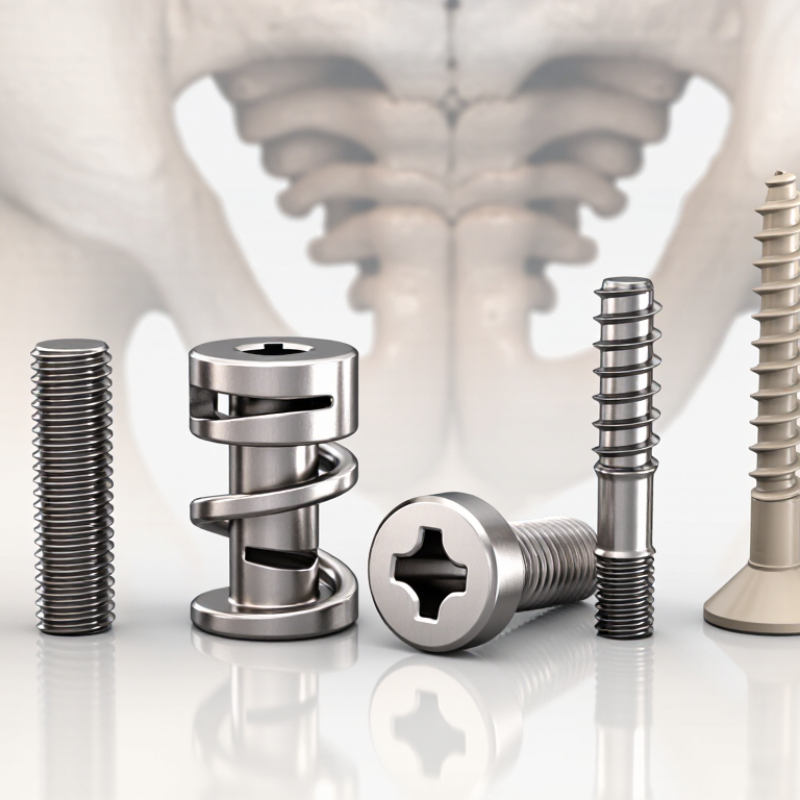
Orthopedic implant screws are small mechanical devices used to hold bone fragments, plates, or joints in a stable position. Their threads grip bone and resist movement during healing. Some screws create compression between fracture pieces, while others secure a plate without pulling the bone tightly against it. The choice depends on bone quality, fracture pattern, and the forces expected after surgery.
Common types include cortical screws, cancellous screws, locking screws, lag screws, and cannulated screws. Cortical screws have fine threads for dense outer bone. Cancellous screws use deeper threads for softer, spongy bone. Lag screws draw one fragment toward another and can close a fracture gap. Cannulated screws contain a hollow center, allowing placement over a guide wire. Locking screws attach firmly to a plate, creating a fixed-angle structure.
Most orthopedic screws are made from surgical-grade metal, such as titanium alloy or stainless steel. Their strength matters, but stiffness is not the only concern. A very rigid construct may change how forces pass through healing bone. Surgeons therefore consider alignment, stability, blood supply, and the patient’s activity level. In practice, screw performance is less simple than a product diagram suggests. Poor placement, weak bone, or excessive loading can reduce fixation. Even experienced surgical teams must reassess these risks during planning and follow-up.
2026 Top Types of Orthopedic Implant Screws? – What Orthopedic Implant Screws Are and How They Work
| Screw Type or Design | Typical Design Features | Common Orthopedic Uses | How It Works | Key Considerations |
|---|---|---|---|---|
| Cortical screw | Usually has relatively fine, closely spaced threads designed for the dense outer layer of bone. | Fixation in cortical bone, including many plate-and-screw constructs in long bones. | Threads engage the bone to provide purchase; the screw head can seat against a plate or bone surface. | Diameter, length, thread engagement, and placement must suit the bone and fixation plan. |
| Cancellous screw | Typically has deeper, more widely spaced threads than a cortical screw. | Fixation in cancellous bone, such as metaphyseal or other trabecular regions. | The larger thread profile engages the trabecular structure and helps resist pullout in relatively less-dense bone. | Thread design and screw length are selected for the target bone and the intended fixation. |
| Locking screw | Has a head designed to engage a threaded hole in a compatible plate. | Fracture fixation with locking plates, including situations where fixed-angle support is useful. | The screw head locks to the plate, creating a fixed-angle connection between screw and plate rather than relying only on plate-to-bone compression. | Requires a compatible plate system and accurate insertion; locking itself does not automatically compress a fracture. |
| Lag screw | A screw used with a technique that lets its threads grip the far fragment while the near fragment can glide over the shaft. | Compression fixation of suitable fractures, including some fractures involving the cancellous bone near a joint. | As the screw is tightened, the fragments are drawn together to create interfragmentary compression. | Compression depends on correct technique, fracture geometry, and adequate bone purchase; it is a fixation method as well as a screw configuration. |
| Cannulated screw | Contains a hollow central channel and is commonly placed over a guidewire. | Selected fracture fixation procedures where guided placement is beneficial, including some hip, foot, and ankle applications. | The guidewire helps direct the screw along a planned path; the screw then provides fixation when advanced into bone. | Guidewire position and trajectory require careful imaging and placement; cannulation may affect the screw’s core dimensions. |
| Self-tapping screw | Has cutting features near the tip that form threads as the screw is inserted into a prepared pilot hole. | Use in suitable bone and fixation systems when thread formation during insertion is intended. | The cutting tip creates a mating thread in the bone as the screw advances. | Whether a pilot hole or prior tapping is needed depends on screw design, bone quality, and surgical technique. |
| Pedicle screw | A robust vertebral screw designed to anchor in the vertebral pedicle and connect to a spinal rod or related construct. | Spinal fixation and stabilization procedures. | It anchors within a vertebra and transfers forces through the connected rod-and-screw construct. | Placement is anatomically demanding because the pedicle is close to important neural and vascular structures. |
| Interference screw | Often has a tapered or threaded profile intended to press a graft or soft tissue against a bone tunnel. | Fixation of tendon or ligament grafts in selected reconstructive procedures. | The screw wedges the graft against the tunnel wall, helping secure it while healing occurs. | Material and design vary; suitability depends on the procedure, graft, bone tunnel, and surgeon’s plan. |
Note: These categories can overlap—for example, a screw may be both cannulated and designed for locking or compression. Screw selection depends on the bone, fracture or reconstruction, fixation system, and patient-specific factors. This table is general educational information, not a treatment recommendation.
Related Posts
-
How to Choose the Right Medical Implants for Your Needs?
-
How to Choose the Best Implant Supplies for Your Dental Practice?
-
Top 10 Orthopedic Bone Screws You Need for Global Sourcing?
-
How to Choose the Right Orthopedic Locking Screws for Your Needs?
-
How to Choose the Right Orthopedic Implants Instruments?
-
How to Choose the Right Bone Plates for Global Sourcing?