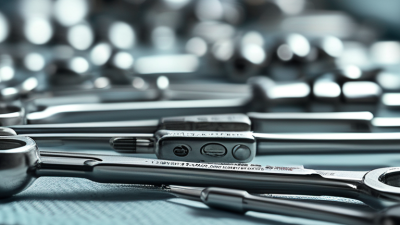
When buyers search for the top orthopedic instruments in China, product names can create confusion. China has a broad manufacturing base, ranging from basic surgical tools to specialized trauma and spine systems. The phrase “orthopedic instruments name” often refers to more than one item. It may describe a tool category, a supplier’s model, or a complete surgical set. This guide explains these differences in practical language. Names matter.
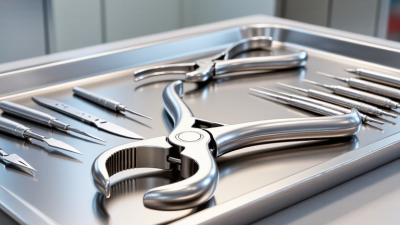
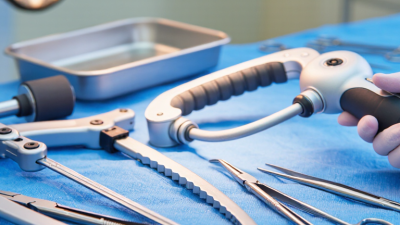
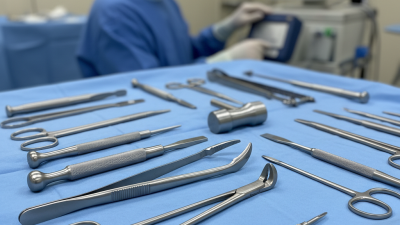
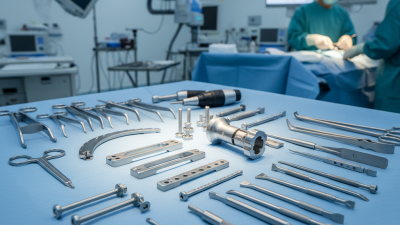
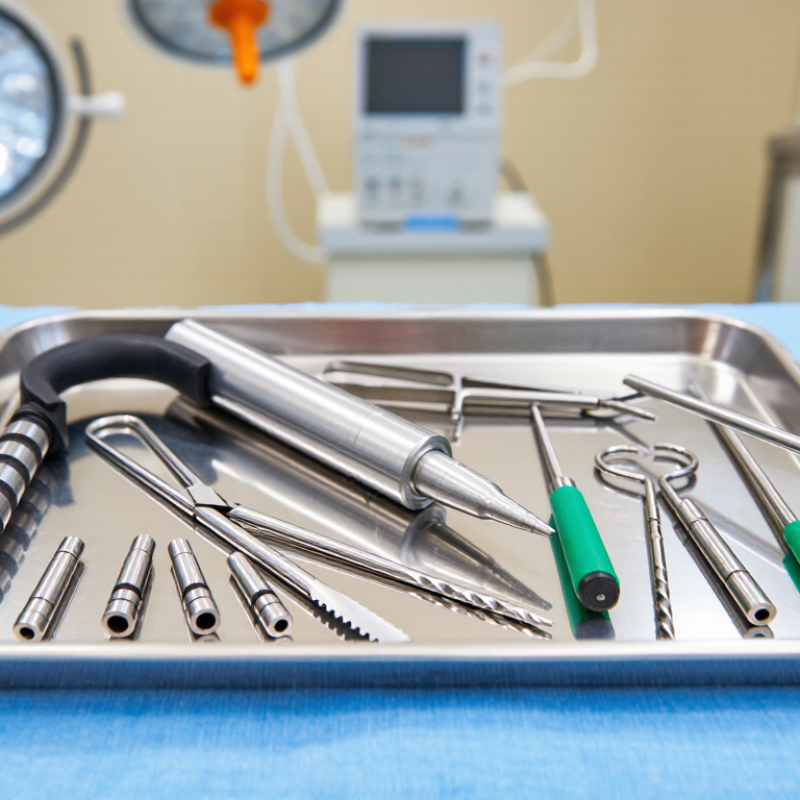
In an operating room, a stainless-steel tray may contain bone saws, reamers, osteotomes, reduction forceps, drill guides, and spinal retractors. Each instrument has a specific role, surface finish, and handling requirement. Orthopedic scissors, plate benders, depth gauges, and external fixation components may also appear in Chinese catalogs. However, terminology is not perfectly uniform. One supplier’s “bone lever” may resemble another supplier’s “elevator.” That small difference can affect ordering, training, and surgical preparation. Catalogs are rarely perfect.
Reliable evaluation requires more than attractive photographs or low prices. Buyers should check material specifications, dimensional drawings, cleaning instructions, sterilization compatibility, and lot traceability. They should also review quality certifications and applicable NMPA registration information. For international purchasing, destination-market requirements need separate verification. A polished brochure proves little. Direct communication with engineers, clinical users, and quality teams provides stronger evidence. This article will compare commonly recognized orthopedic instrument names and explain how professionals assess their design, durability, and intended use. It will not treat popularity as proof of clinical superiority. Some naming differences may remain unresolved, and that limitation deserves honest attention.
In China, orthopedic instruments are reusable or single-use tools designed to support the diagnosis, treatment, and reconstruction of bones, joints, and related tissues. Their scope includes instruments used in trauma surgery, joint procedures, spinal operations, sports medicine, and pediatric orthopedics.
Common orthopedic instrument names include
Spinal procedures may require rod benders, screwdrivers, and alignment tools. Arthroscopy uses specialized probes, punches, graspers, and cannulas. External fixation procedures involve clamps, pin guides, and frame-adjustment instruments. Each tool has a specific working end, material requirement, and intended surgical task.
In practical procurement, Chinese hospitals may classify these products by function, procedure, or instrument set. Names can differ between hospital catalogs, technical documents, and English translations. This is not a minor issue.
A “bone drill” may describe a broad category, while its chuck, speed range, and sterilization method determine actual use.
Product evaluation should therefore examine intended purpose, technical specifications, cleaning instructions, packaging, and applicable registration information. Compliance requirements can vary according to product risk and use conditions.
A familiar name is never enough. I have also found that translated terminology sometimes creates avoidable confusion, especially when one Chinese term covers several surgical variations.
Clear documentation remains essential.
Orthopedic instruments in China are commonly grouped by their surgical purpose. Bone saws cut long bones during replacement or trauma procedures. Oscillating saws create controlled cuts, while hand saws support smaller corrections. Bone drills make holes for screws, pins, or wire. Reamers enlarge prepared channels and help shape implant beds. Their sizes must match the surgical plan. Fit matters.
Reduction clamps and bone-holding forceps stabilize fragments during fixation. Some have pointed jaws for firm cortical grip. Others use broad jaws to reduce surface pressure. Osteotomes and chisels separate or reshape bone. Curettes remove damaged tissue from cavities. Rongeurs trim small bone sections, especially around narrow surgical spaces. These tools demand controlled force, not speed.
Fixation instruments include screwdrivers, depth gauges, tap sets, plate benders, and torque-limiting drivers. A depth gauge measures the channel before selecting screw length. Taps prepare threads when required. Plate benders adjust contour without creating sharp stress points. That detail matters. Chinese suppliers may use different names for similar tools, so drawings, materials, dimensions, and sterilization instructions deserve careful checking. Stainless steel is common, but surface finish and joint movement can vary. Even experienced teams can overlook a loose hinge or a dull cutting edge. Instrument selection is not only about category; it also depends on anatomy, procedure, surgeon preference, and operating-room workflow.
Major orthopedic instrument categories and their common clinical uses. The values represent the number of representative instrument types listed for each category, not market share or company sales.
Fracture Fixation: Bone plates, cortical screws, cancellous screws, intramedullary nails, reduction forceps, and drill guides are used to align and stabilize fractured bones.
Arthroplasty: Acetabular reamers, femoral broaches, trial heads, alignment guides, and extraction tools support joint replacement procedures.
Spinal Surgery: Pedicle screwdrivers, rod benders, screw taps, awls, distractors, and rongeurs are used for spinal decompression, fixation, and alignment.
Arthroscopy: Cannulas, trocar obturators, graspers, shavers, punches, and suture passers support minimally invasive joint procedures.
Bone Preparation: Osteotomes, curettes, bone rongeurs, Gigli saws, and bone drills are used to cut, shape, remove, or prepare bone.
External Fixation: Schanz pin inserters, pin guides, clamps, connecting rods, and tensioning devices help stabilize fractures outside the body.
What Are the Top Orthopedic Instruments Names in China?
Chinese orthopedic instrument manufacturers now supply trauma, spine, sports medicine, and joint reconstruction facilities. Common product names include locking compression plates, intramedullary nails, pedicle screw systems, interbody cages, external fixators, bone drills, and surgical saws. Many factories also produce acetabular cups, femoral stems, suture anchors, and arthroscopy shavers.
Demand is supported by China’s aging population. The National Bureau of Statistics reported that people aged 60 and above represented 21.1% of the population in 2023. Industry analyses from Grand View Research and Fortune Business Insights forecast continued mid-single-digit growth for the global orthopedic-device market. Their figures differ because product categories and regional definitions are not identical. That matters when comparing Chinese manufacturers.
In practice, hospitals assess more than catalogue depth. They inspect titanium composition, coating consistency, instrument balance, tray organization, and sterilization compatibility. A well-designed locking plate should feel stable in the surgeon’s hand, with screws engaging smoothly and predictably. Manufacturers with ISO 13485 systems and valid NMPA registrations offer stronger quality evidence. Clinical feedback and post-market surveillance remain essential. Fit matters. Evidence matters more.
A weakness remains. Public reports rarely disclose revision rates, instrument breakage rates, or long-term patient outcomes by product line. Buyers should therefore request testing records, traceability documents, clinical data, and realistic delivery schedules before procurement. Low unit cost can look attractive, but inconsistent tolerances may increase operating-room time. That trade-off deserves closer review.
China’s commonly used orthopedic instrument names include bone-holding forceps, reduction forceps, osteotomes, bone rongeurs, periosteal elevators, cannulated drills, and external-fixator tools. Their performance depends heavily on material selection. ISO 7153-1 identifies stainless steel as a primary material for surgical instruments. In practice, martensitic stainless steel offers hardness, while corrosion-resistant grades support repeated cleaning. A 2024 Grand View Research analysis estimated the global orthopedic devices market at over US$48 billion, increasing pressure for durable, traceable instruments.
Design details often decide surgical control. Reduction forceps need balanced jaws and secure ratchets. Osteotomes require sharp edges without brittle tips. Cannulated drills must maintain concentricity, especially when guidewires pass through narrow bone channels. Small handle textures matter too. Wet gloves expose poor knurling quickly. I have seen instruments that looked precise but felt unstable after sterilization cycles. That gap deserves more testing.
Manufacturers in China commonly align production with ISO 13485 quality systems, ISO 7153-1 material guidance, and applicable Chinese GB standards. Dimensional inspection may include optical measurement, hardness testing, surface-finish checks, and passivation verification. The 2023 ISO Survey reported more than 1.5 million ISO 13485 certificates worldwide, showing how widely quality systems are adopted. Certification alone is not enough. Batch records, cleaning validation, fatigue testing, and traceability reveal whether a polished instrument is truly dependable.
What Are the Top Orthopedic Instruments Names in China?
How Hospitals Select and Evaluate Orthopedic Instruments in China
Chinese hospitals usually begin with clinical needs, not product names. Common orthopedic instruments include bone saws, surgical drills, reamers, reduction forceps, osteotomes, retractors, and external fixation tools. Each item must match the procedure, patient anatomy, and operating-room workflow.
Evaluation often starts with material quality. Stainless steel should resist corrosion after repeated cleaning and sterilization. Handles need a secure grip, even with surgical gloves. A drill should maintain stable speed without excessive vibration. Hospitals also review cutting accuracy, joint strength, surface finishing, and ease of disassembly. Trial use can reveal problems that catalogs hide. A surgeon may notice poor balance after only one operation.
Procurement teams check documentation, batch traceability, sterilization guidance, training support, and maintenance response. They also compare samples under realistic conditions. Applicable Chinese medical-device requirements and hospital procedures must be considered. Price matters, but low purchase cost can create higher repair and replacement expenses. This point is sometimes underestimated.
Tips: Ask surgeons, nurses, and sterilization staff to assess the same instrument. Record feedback immediately after testing. Review cleaning steps with the central sterile department. Request clear tolerances, inspection records, and replacement-part information. Keep a simple evaluation form.
Experience shows that no instrument is perfect for every department. A familiar design may still slow a new surgical team. Hospitals should reassess performance after several months, not only during procurement. Feedback can be incomplete, and that weakness deserves attention.
| Instrument Name | Main Orthopedic Use | Typical Procedure or Department | Common Material | Key Selection Criteria | Sterilization and Reprocessing | Hospital Evaluation Weight | Common Inspection Points |
|---|---|---|---|---|---|---|---|
| Bone Rongeur | Removes small sections of bone and enlarges or shapes bony openings. | Spinal surgery, neurosurgical access, trauma and reconstructive procedures. | Medical-grade stainless steel; tungsten-carbide inserts may be used in cutting jaws. | Jaw sharpness, controlled bite size, spring durability, handle comfort and corrosion resistance. | Cleaning followed by steam sterilization when validated by the manufacturer. | High | Jaw alignment, cutting performance, spring return, surface pitting and hinge movement. |
| Bone Chisel | Cuts, splits or shapes bone during osteotomy and bone preparation. | Trauma, joint reconstruction, spinal and corrective orthopedic surgery. | Hardened surgical stainless steel. | Edge retention, impact strength, balanced weight, handle safety and dimensional accuracy. | Manual or ultrasonic cleaning, inspection and validated steam sterilization. | High | Cutting-edge condition, mushrooming of the striking end, cracks and corrosion. |
| Bone Curette | Scrapes soft tissue, granulation tissue or cancellous bone from a cavity. | Bone tumor procedures, spinal surgery, infection treatment and joint surgery. | Stainless steel, with a sharp or semi-sharp working loop. | Loop strength, edge consistency, shaft stiffness, cavity access and ergonomic grip. | Thorough cleaning of the cup or loop, followed by validated sterilization. | Medium to High | Loop deformation, burrs, retained biological material and handle-to-shaft security. |
| Periosteal Elevator | Separates periosteum and soft tissue from bone. | Fracture fixation, arthroplasty, osteotomy and reconstructive surgery. | Medical-grade stainless steel or titanium for selected applications. | Blade smoothness, suitable curvature, rigidity, atraumatic edges and grip comfort. | Cleaning of the blade-to-handle junction and steam sterilization where approved. | Medium | Blade deformation, sharp unintended edges, weld integrity and surface finish. |
| Reduction Forceps | Holds and aligns bone fragments during fracture reduction and fixation. | Trauma surgery, long-bone fixation, pelvic surgery and minimally invasive techniques. | Stainless steel; serrated or atraumatic jaw surfaces. | Clamping force, jaw alignment, locking mechanism, reach and resistance to torsion. | Open-joint cleaning, lubrication when specified and validated steam sterilization. | Very High | Lock function, jaw symmetry, ratchet wear, tip damage and hinge smoothness. |
| Bone Holding Forceps | Grips bone securely during preparation, drilling or fixation. | Trauma, arthrodesis, osteotomy and reconstructive orthopedic procedures. | Stainless steel with textured or fenestrated gripping surfaces. | Grip security, atraumatic contact, handle leverage, size range and mechanical strength. | Disassembly and cleaning of joints, followed by validated sterilization. | High | Tip alignment, ratchet engagement, excessive play, corrosion and grip-surface wear. |
| Orthopedic Drill Guide | Directs a drill or guide wire to a planned position and angle. | Fracture fixation, spinal instrumentation and joint reconstruction. | Stainless steel or titanium; radiolucent polymers may be used in selected designs. | Dimensional accuracy, guide-wire compatibility, radiographic visibility and rigidity. | Careful cleaning of channels and apertures, followed by validated sterilization. | Very High | Internal blockage, diameter accuracy, guide alignment, burrs and structural deformation. |
| Cannulated Drill Bit | Creates a controlled bone channel over a guide wire. | Trauma fixation, cannulated screw placement and selected spinal procedures. | Hardened stainless steel or other validated surgical cutting alloys. | Cutting efficiency, concentricity, cannulation accuracy, heat control and compatibility with the handpiece. | Internal-channel flushing, brushing, drying and validated sterilization. | Very High | Cutting-edge wear, blocked cannula, runout, corrosion and attachment security. |
| Depth Gauge | Measures the depth of a drilled bone hole for implant or screw selection. | Fracture fixation, spinal fixation and small-bone surgery. | Stainless steel with engraved or laser-marked measurement graduations. | Measurement accuracy, scale readability, probe rigidity and compatibility with the implant system. | Cleaning of the probe and sliding mechanism, followed by validated sterilization. | Very High | Calibration, legibility, probe straightness, slider movement and tip integrity. |
| Screwdriver and Bit Set | Inserts, tightens or removes orthopedic fixation screws. | Trauma, spinal surgery, foot and ankle surgery, and joint reconstruction. | Stainless steel, with hardened driver tips and torque-limiting components where required. | Interface fit, torque transmission, tip wear, handle ergonomics and compatibility with screw geometry. | Cleaning of interfaces and modular connections, followed by validated sterilization. | Very High | Tip deformation, wobble, connection security, torque calibration and corrosion. |
| Torque-Limiting Handle | Applies a controlled tightening torque to fixation components. | Spinal instrumentation, fracture fixation and joint reconstruction. | Stainless steel and engineered medical-grade polymers. | Torque accuracy, repeatability, calibration interval, tactile feedback and connector stability. | Follow the validated cleaning and sterilization method; avoid unapproved lubricants. | Critical | Calibration status, release function, scale visibility, connector wear and handle damage. |
| Intramedullary Reamer | Prepares the medullary canal for an intramedullary implant. | Long-bone fracture fixation and selected reconstructive procedures. | Flexible or rigid stainless-steel shaft with cutting flutes and compatible drive components. | Cutting performance, shaft flexibility, fatigue resistance, size accuracy and drive compatibility. | Extensive cleaning of flutes and interfaces, inspection and validated sterilization. | Critical | Flute damage, shaft kinking, dimensional accuracy, connection integrity and retained debris. |
| Bone Saw Blade | Cuts bone during osteotomy, amputation or joint replacement preparation. | Arthroplasty, trauma, deformity correction and reconstructive surgery. | Stainless steel or other validated surgical blade alloys. | Tooth geometry, cutting efficiency, vibration control, compatibility with the saw handpiece and sterility status. | Many blades are single-use; reusable designs require validated cleaning and sterilization. | Critical | Tooth sharpness, cracks, deformation, packaging integrity and correct connection. |
| Hohmann Retractor | Retracts soft tissue and exposes bone or the operative field. | Trauma, arthroplasty, osteotomy and general orthopedic surgery. | Stainless steel with polished or textured handle surfaces. | Blade profile, atraumatic edges, rigidity, exposure capability and handle ergonomics. | Cleaning of blade edges and handle junctions, followed by validated sterilization. | High | Blade bending, sharp unintended edges, surface finish and handle security. |
| Joint Distractor | Maintains controlled joint space and assists exposure or alignment. | Knee, hip, ankle and other reconstructive or arthroscopic procedures. | Stainless steel, titanium or validated medical-grade polymer components. | Distraction control, load capacity, locking stability, size adjustment and compatibility with accessories. | Cleaning of threaded and modular parts, inspection and validated sterilization. | High | Thread condition, locking function, alignment, corrosion and component completeness. |